Last updated:
When a solar system needs a repair
Most faults show up in one of three ways. The inverter screen goes blank or shows an error code. The generation meter stops moving on a bright day. Or the monthly figures slowly fall away from where they used to be. The first two usually point to the inverter or something between it and the panels. A slow fall can be dirt, shade from a growing tree, a failing panel or one string of panels dropping out.
A quick check you can do yourself is to read the generation meter at the same time on two sunny days. If the total hasn’t moved, the system isn’t producing, and it is worth a call. If it has moved but far less than it used to, a maintenance visit that measures output against what a Derby roof should make may be the better starting point.
Inverter faults and replacement
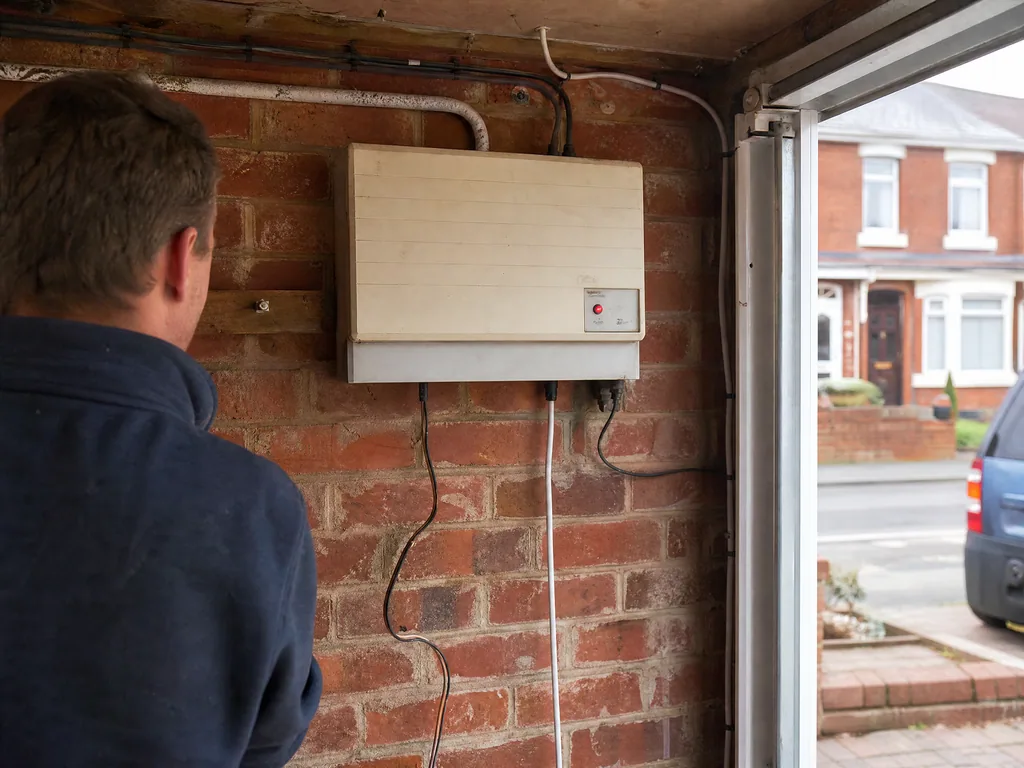
The inverter is the part most likely to fail. The Energy Saving Trust suggests planning for a replacement after about 12 years, well short of the 25 years or more that panels last (Energy Saving Trust). Some faults can be cleared, such as a tripped isolator or a grid voltage error. Others, particularly on older string inverters, mean replacement.
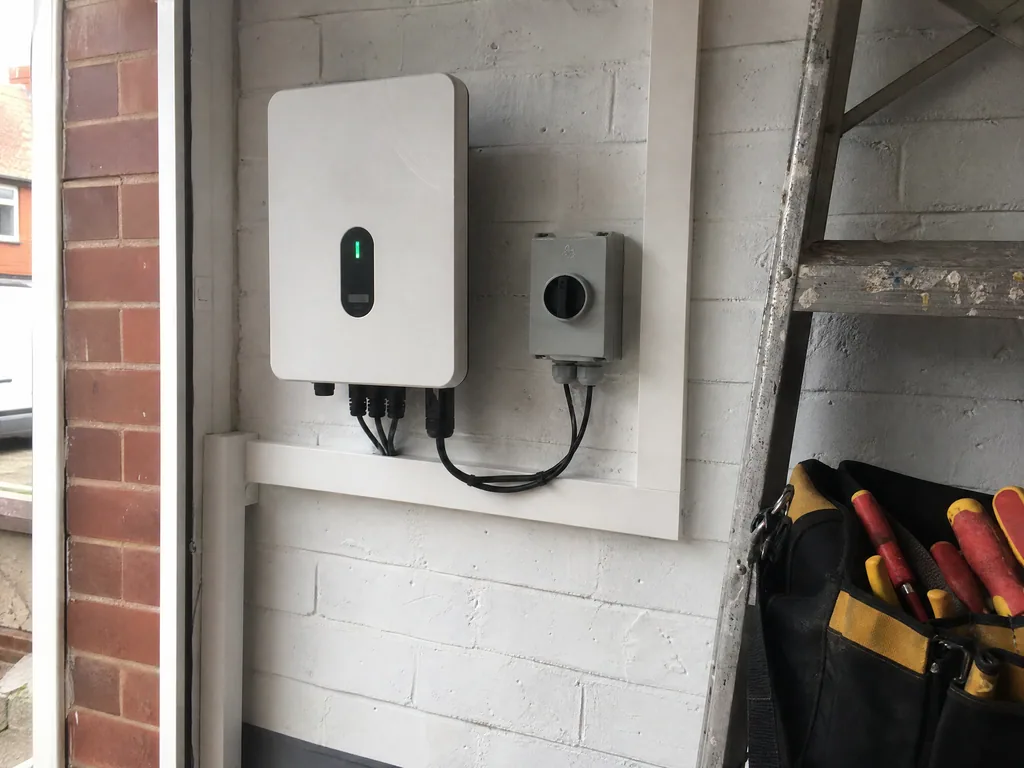
When an inverter is replaced, it has to suit the array: the number of panels, how they are wired and the voltage they produce. That is also the moment to decide about a battery. A hybrid inverter costs more than a like-for-like swap but lets a battery go in later without another inverter change. If a battery is already on your list, solar battery storage explains the options. My solar inverter has stopped working walks through what to check before you call.
Faults between the panels and the inverter
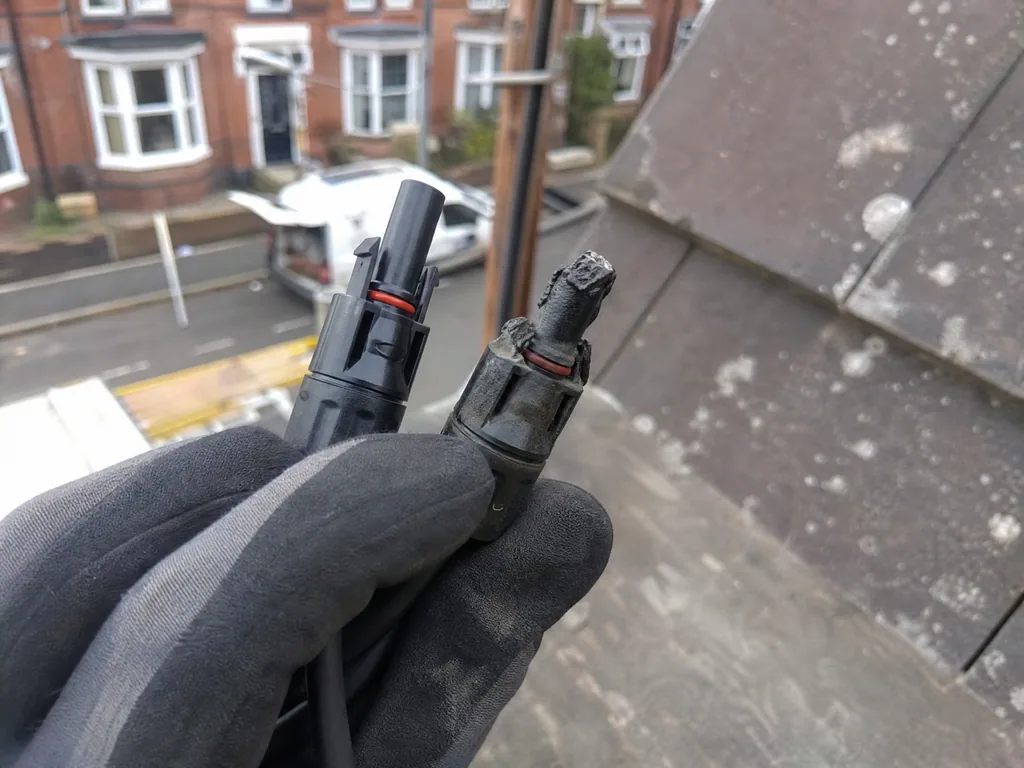
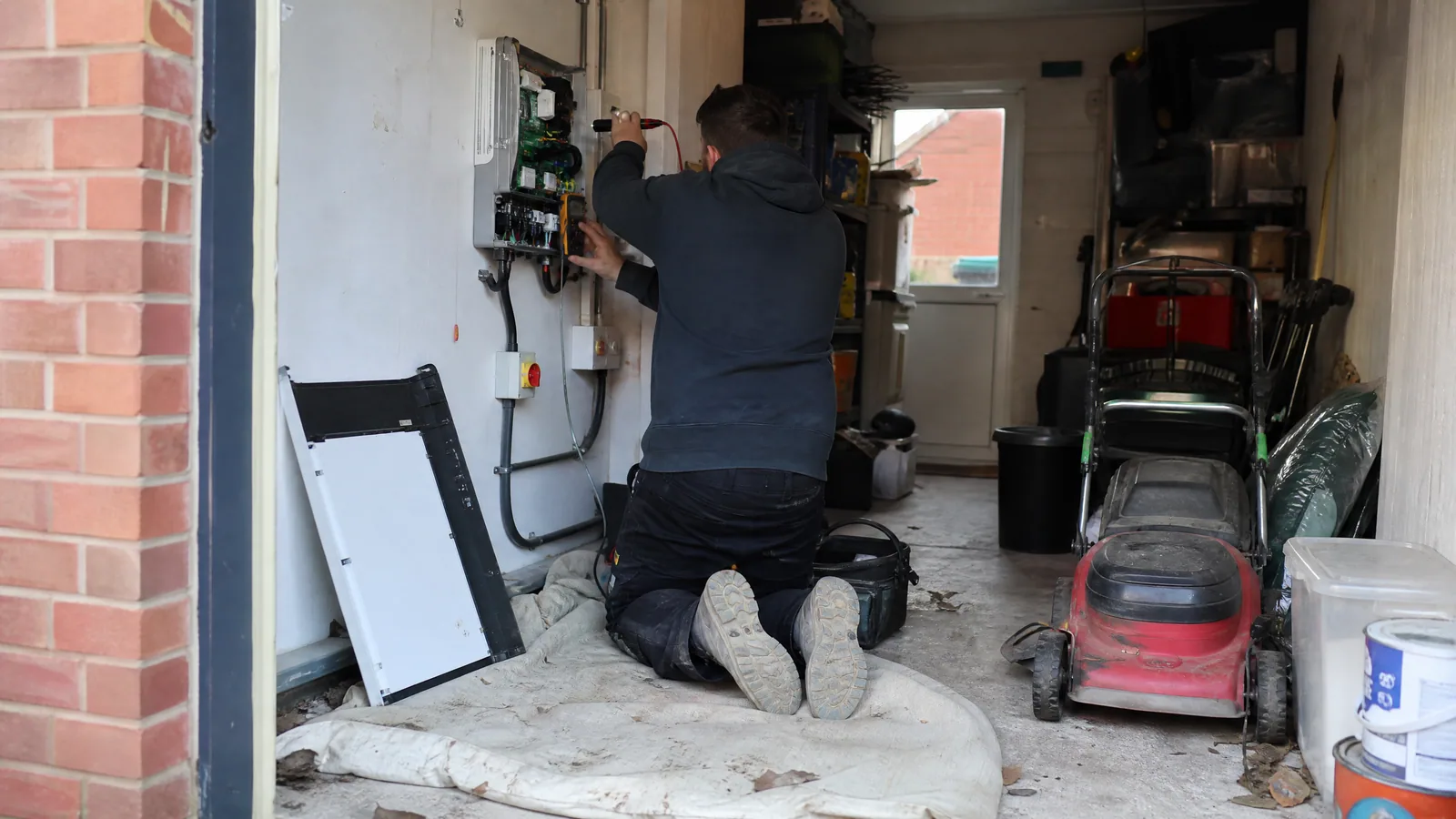
Not every fault is in the inverter. Connectors on the roof can work loose or corrode, cables can be chewed where pigeons have nested under the array, and DC isolators can fail after years of heat and cold. A cracked or scorched panel can drag down a whole string. These are found by testing each part in turn, which is why we don’t quote for a new inverter until the rest of the system has been checked.
If birds are the cause, the fix is to clear the nest material and fit mesh once any nest is no longer in use. Solar panel bird proofing covers how that works and when it can be done.
Taking panels off for roof work
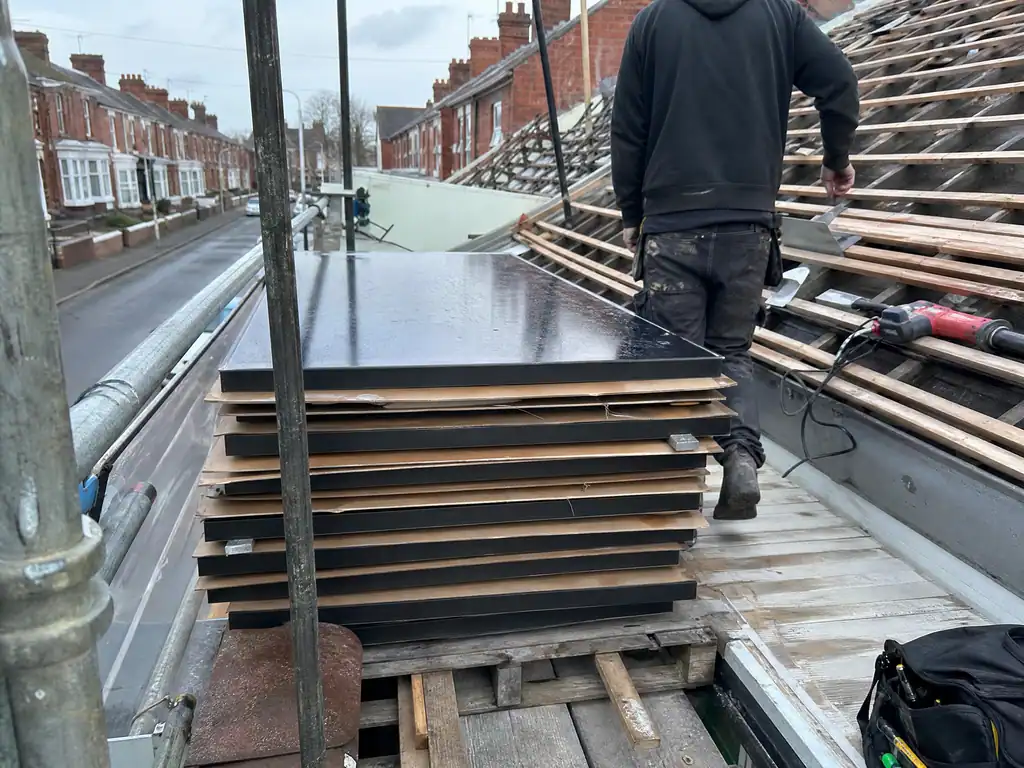
If the roof under your panels needs replacing or repairing, the panels have to come off first. We disconnect the system safely, lift the panels and rails, store them, and refit and test everything once the roofer has finished. Planning the two jobs together lets the scaffold serve both. Published UK guides put the solar part of a reroof at roughly £1,300 to £2,500 on top of the roofing (Depth of Light), and the roof replacement guide goes through what affects the figure.
What a repair costs in Derby
Checkatrade lists solar panel servicing and repair in Derby at £224 to £483, with £325 as the average (Checkatrade). That is for finding and fixing common faults. A replacement inverter, panels or a removal and refit are priced separately, and you get that price in writing before any part is bought.
What's included
- A call first to go through the inverter screen, any error code and what the generation meter shows
- Checks from the roof down: panels, connectors, DC cable runs and isolators
- Inverter testing, including the event log where the model keeps one
- A plain answer on whether a part can be repaired or needs replacing
- A written price before anything is ordered
- Replacement inverters matched to the array, with a battery-ready option if you want one later
- Removal and refit of panels around roof work, with the system tested again afterwards
- A note of what was found and done, for your records and any Feed-in Tariff query
How the options compare
Finding the fault
- Leave it
- Output lost every sunny day
- General electrician
- Often limited to the consumer unit
- Solar repair visit
- Panels, cabling, isolators and inverter tested
Inverter replacement
- Leave it
- n/a
- General electrician
- May not stock or know solar inverters
- Solar repair visit
- Matched to the array size and voltage
Roof work around the panels
- Leave it
- Roofer works around them, or not at all
- General electrician
- Not usually offered
- Solar repair visit
- Panels lifted, stored and refitted, then retested
Feed-in Tariff records
- Leave it
- Generation keeps dropping
- General electrician
- Not usually considered
- Solar repair visit
- What was changed is written down for your supplier
Price
- Leave it
- Lost savings
- General electrician
- Varies
- Solar repair visit
- In writing before any part is bought